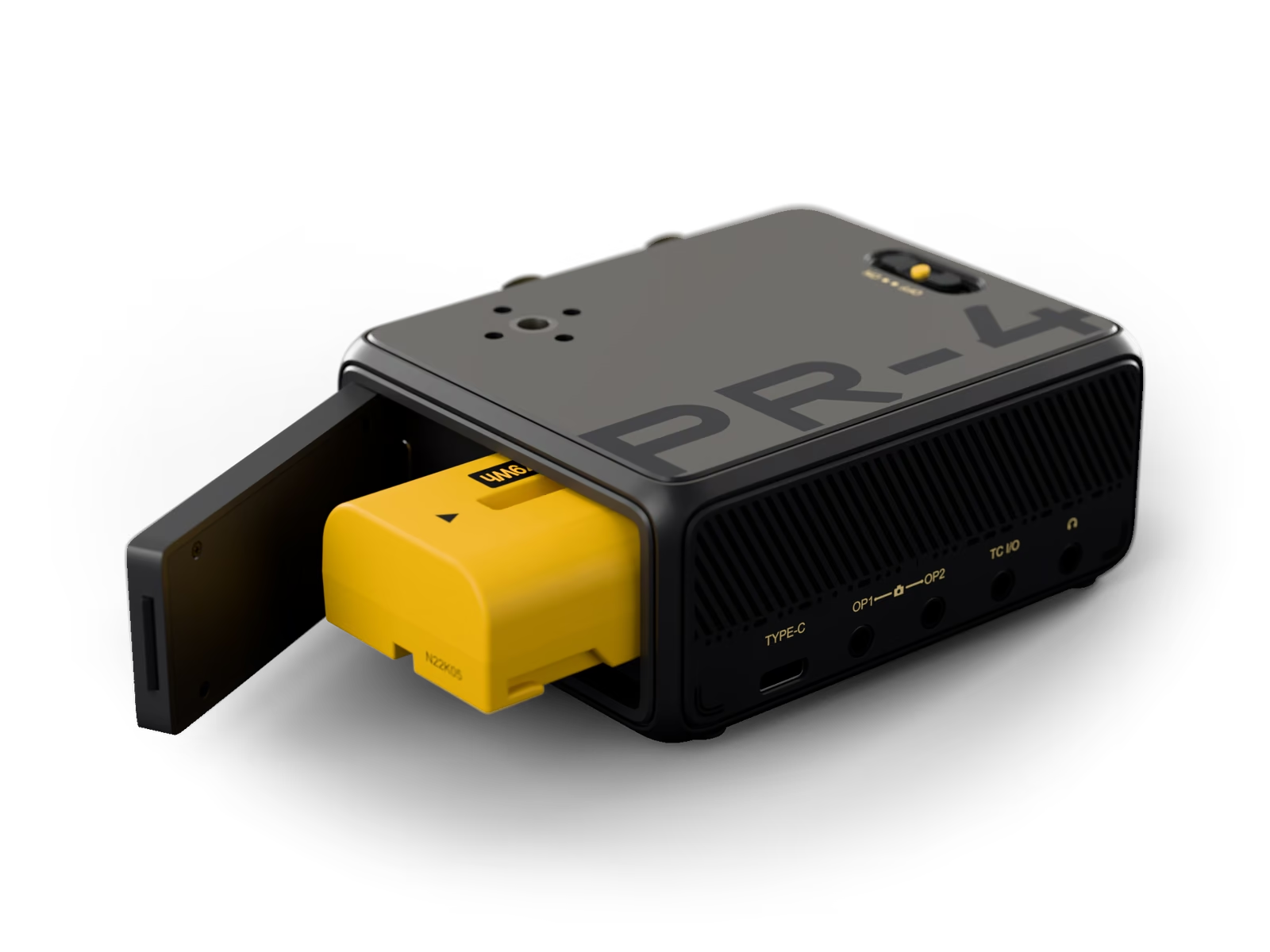
NP-F550 + USB-C
The PR-4 features an internal NP-F550 battery bay that can be recharged via the USB-C port on the side of the unit. It also can just run off the USB-C port if you want, making external power options cheap and readily available.

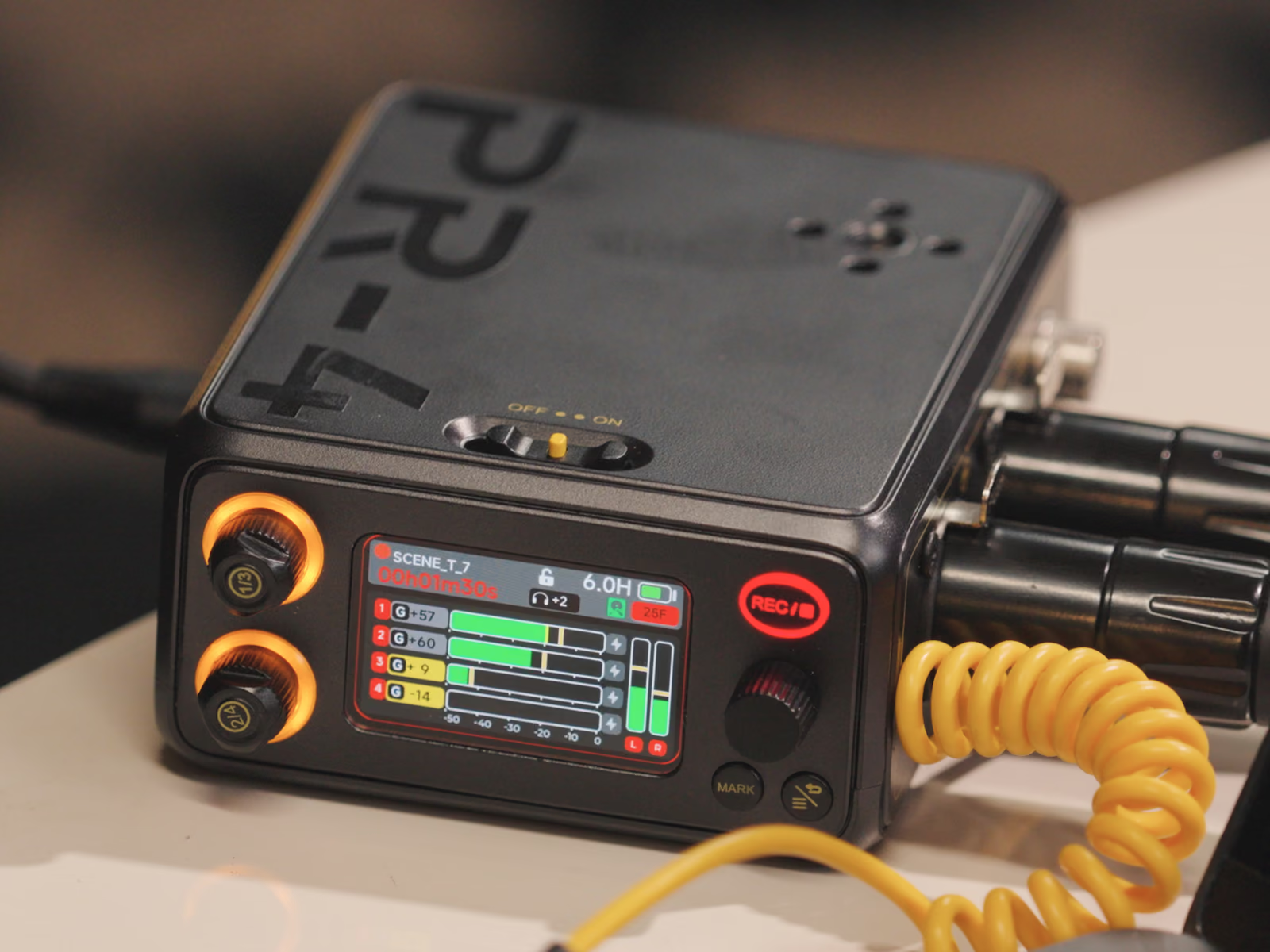
PR-4 is a compact, forward-facing recorder for doc, ENG, and video creator workflows. It delivers 32-bit float performance, 4 inputs / 6 tracks, wired SMPTE LTC/ATC plus wireless timecode for DEITY’s ecosystem, and Sidus App control for integrated full wireless remote control.
Recognition
The Deity PR-4 has quickly established itself as an award-winning field recorder, earning recognition from respected organizations across production, broadcast, and filmmaking. The PR-4 stands out as one of the most exciting new audio devices introduced in 2026.

From the AMOLED glass to the rear tally, everything that makes PR-4 a 4-input, 6-track recorder, stacked into one unit.
01
ReGain Preamps
Up to 60 dB of gain, -127 dBV EIN
02
NP-F Power
Internal NP-F550 bay, USB-C PD and 4-pin Hirose-compatible power
03
True Dual Media
SSD + SD: the internal 64 GB SSD and a swappable SD card, recording at once
04
Rear Tally / AES3 + AES42
Rear tally light, digital inputs for Quad RX pairing
ReGain Preamp™
The PR-4 features the brand new ReGain Preamps™, ultra-quiet microphone preamps that deliver up to 60 dB of gain, providing enough amplification to drive even demanding dynamic microphones without the need for external inline boosters.
Achieving an Equivalent Input Noise of -127 dBV (-125 dBu) represents a significant engineering accomplishment for the PR-4’s preamp design. Measured under A-weighted conditions at 60 dB gain with a 150 ohm source, this level of performance places the PR-4 firmly in professional territory, delivering an exceptionally low noise floor that preserves detail and clarity even with low-output microphones.

60dB
Of clean gain, no inline booster needed
−127dBV
EIN (-125 dBu), A-weighted, 60 dB gain, 150 Ω source
VoiceAware Automix™
VoiceAware Automix™ intelligently manages multiple microphones in real time, dynamically prioritizing active voices while subtly reducing the presence of inactive channels. By continuously analyzing incoming signals, it maintains a clean and focused mix that minimizes ambient buildup and keeps dialogue clear and intelligible, even in multi-speaker environments.
The result, VoiceAware Automix™ creates a clean, well-balanced stereo reference mix for post-production, giving editors a helpful starting point.


Front
 ABCDEF
Left side
 56789
56789
Right side
 1234
1234
Rear
 101112
Port map
Right side: inputs and DC
Left side: outputs and USB
Rear: power and media
Front: controls
Top and bottom
SSD + SD
Using a dedicated recorder like the PR-4 with dual media recording helps protect against some of the most common data-loss scenarios in production. SD cards can be lost, corrupted, or accidentally formatted during a busy shoot or when offloading media at the end of the day. By recording simultaneously to both an SD card (up to 2TB) and the internal 64GB SSD, the PR-4 provides a built-in safety net, ensuring there is always a second copy of your audio even if something happens to the primary card.
We also allow you to record different signals to each media format. Client asks for just a stereo file? You can still record the POLY file as a backup… just in case.
SSDInternal 64 GB
POLY · 6 TRKPOLY · 6 TRK
SDSwappable card
POLY · 6 TRKSTEREO · L/R MIX
Both media write the same polyphonic file at the same time.The SD card gets the stereo mix for the client; the SSD keeps the full poly file.

The PR-4 runs on rechargeable power.
The PR-4 features an internal NP-F550 battery bay that can be recharged via the USB-C port on the side of the unit. It also can just run off the USB-C port if you want, making external power options cheap and readily available.
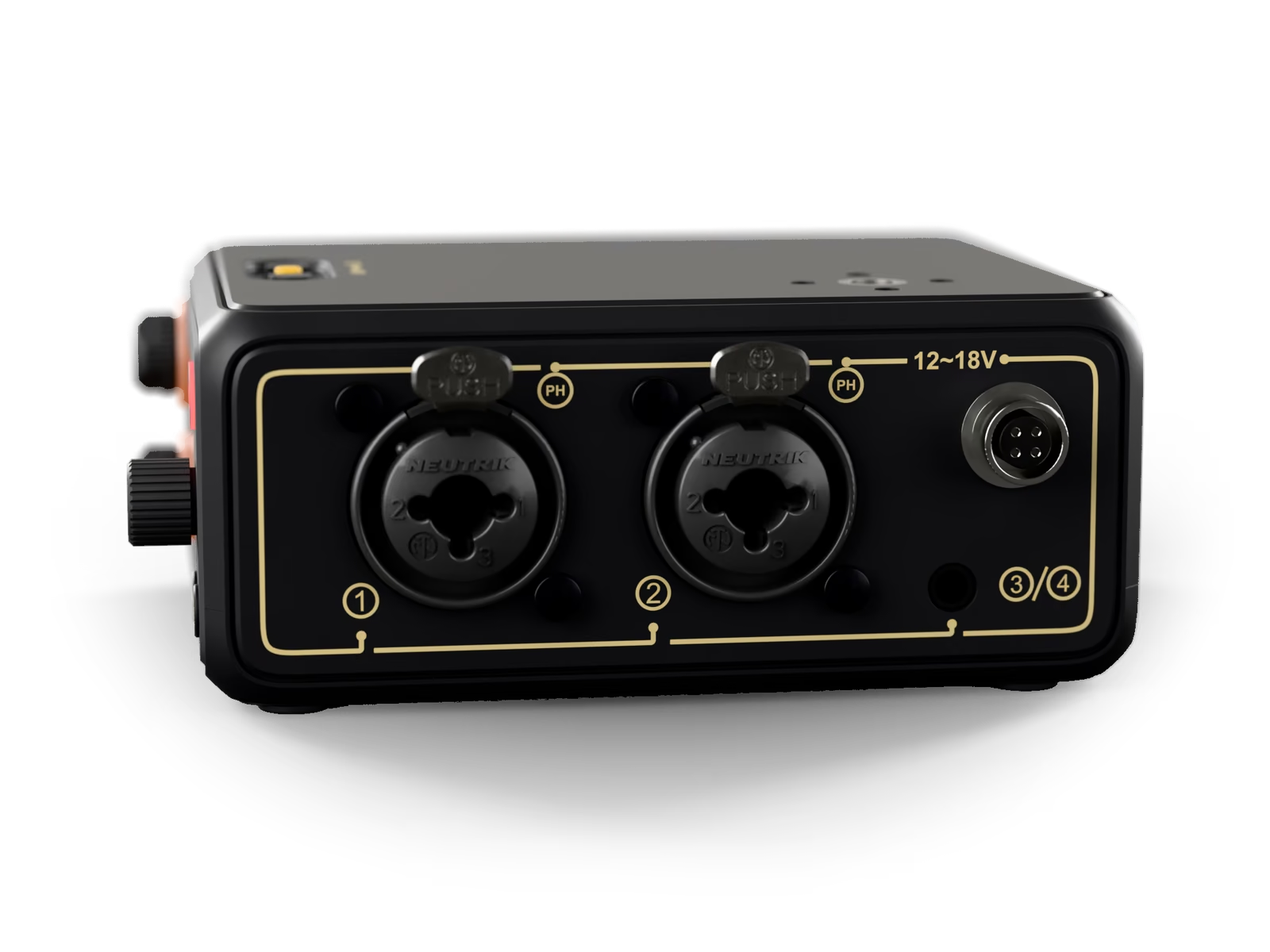
For the professional looking to integrate the PR-4 into a bigger setup, there is a 4-Pin Push Pull Power port on the other side of the unit that is compatible with the SPD-1, SPD-Mini, or can be fed direct power from the S-95 using the SPD-HRBatt. It too can also be used to recharge the internal L-series battery.
LiveHit DeNoiser™
LiveHit DeNoiser is designed to prioritize intelligibility in real-world recording conditions by actively shaping the audio signal around the human voice. And it does all that without adding measurable latency to your audio.
It focuses on reducing ambient distractions like traffic, wind, and environmental rumble while preserving the core presence and clarity of the speaker. The result is a reporter’s microphone track that cuts through the mix, helping operators capture usable dialogue even when live broadcast in uncontrolled environments.
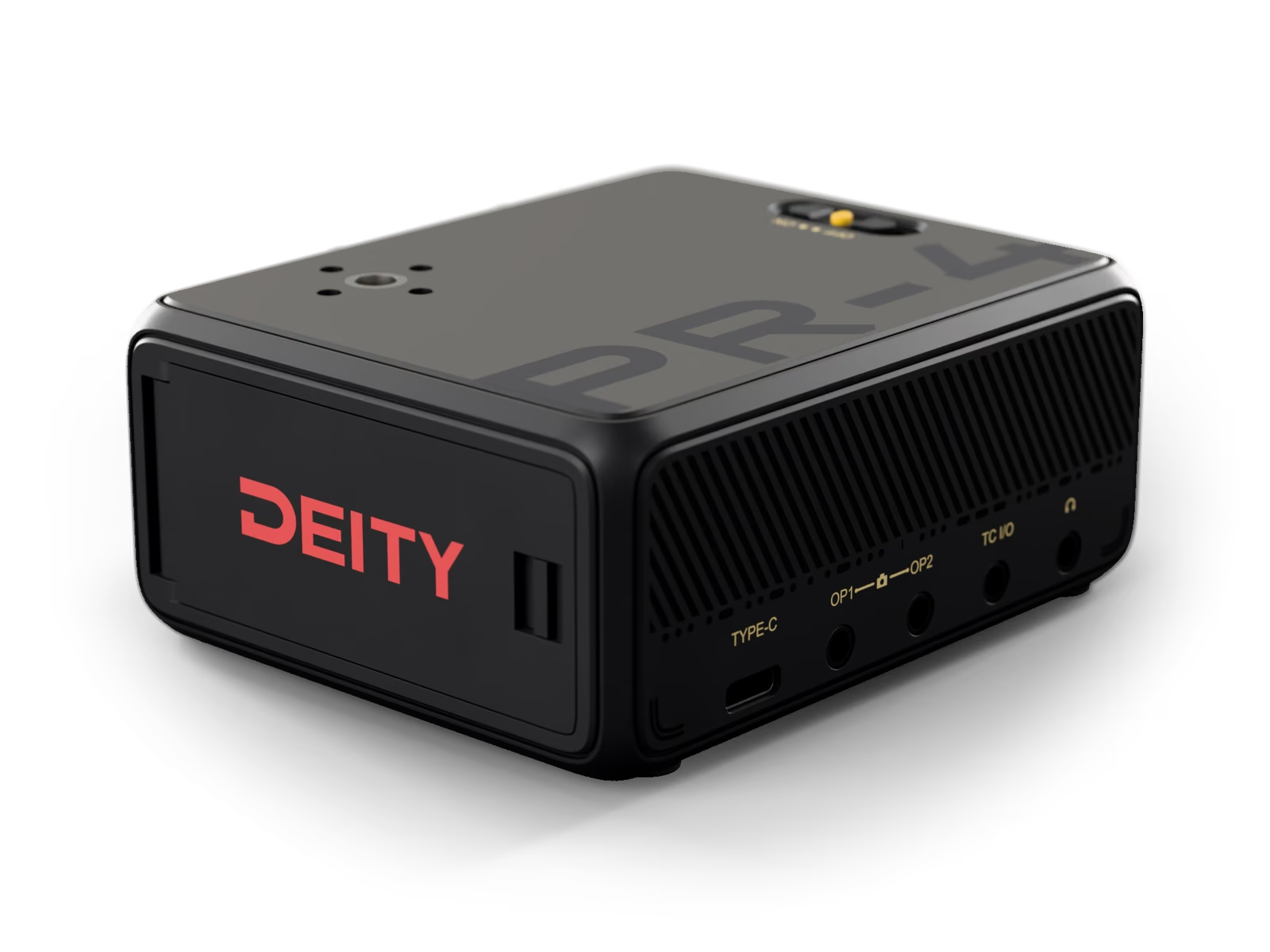
A tally light on the back of the unit shows when the PR-4 is rolling, so the camera operator, boom op or talent can check the recorder at a glance, even when it sits in a bag or on the back of a rig.
Also a camera audio interface. The PR-4 can also function as a compact audio interface for cameras, allowing multiple microphones to be mixed and sent directly into the camera as a clean, mixed signal.
AES3 / AES42
Quad RX units typically require AES3 support to achieve all 4 channels. Making the PR-4 a perfect pairing with a Quad RX.
SSD & SD
Automatically logging every session and embedding critical metadata directly into each file, to both the SSD & SD Card.
SC 12 / TK 3
We give you metadata control over; Folder Name, Scene / Take File Name & Preset Notes per File
.WAV · 6 TRK
No longer will you have to juggle multiple mono or stereo tracks. Polywave support and Track names work in your favorite video editing software.

Wireless timecode

The goal has always been for the recorder to be the TC master source on a video shot, now it truly is.
The PR-4 is able to act as the master timecode generator for a small production team. Through our wireless timecode protocol, the PR-4 is able to transmit its timecode to our entire timecode ecosystem of devices:
The PR-4 also features a 3.5mm TC I/O port. Timecode jam a camera and other gear with SMPTE LTC/ATC.
Accuracy target: 1 frame / 72 h.
Or wirelessly sync via the Sidus Audio App.
Accessories
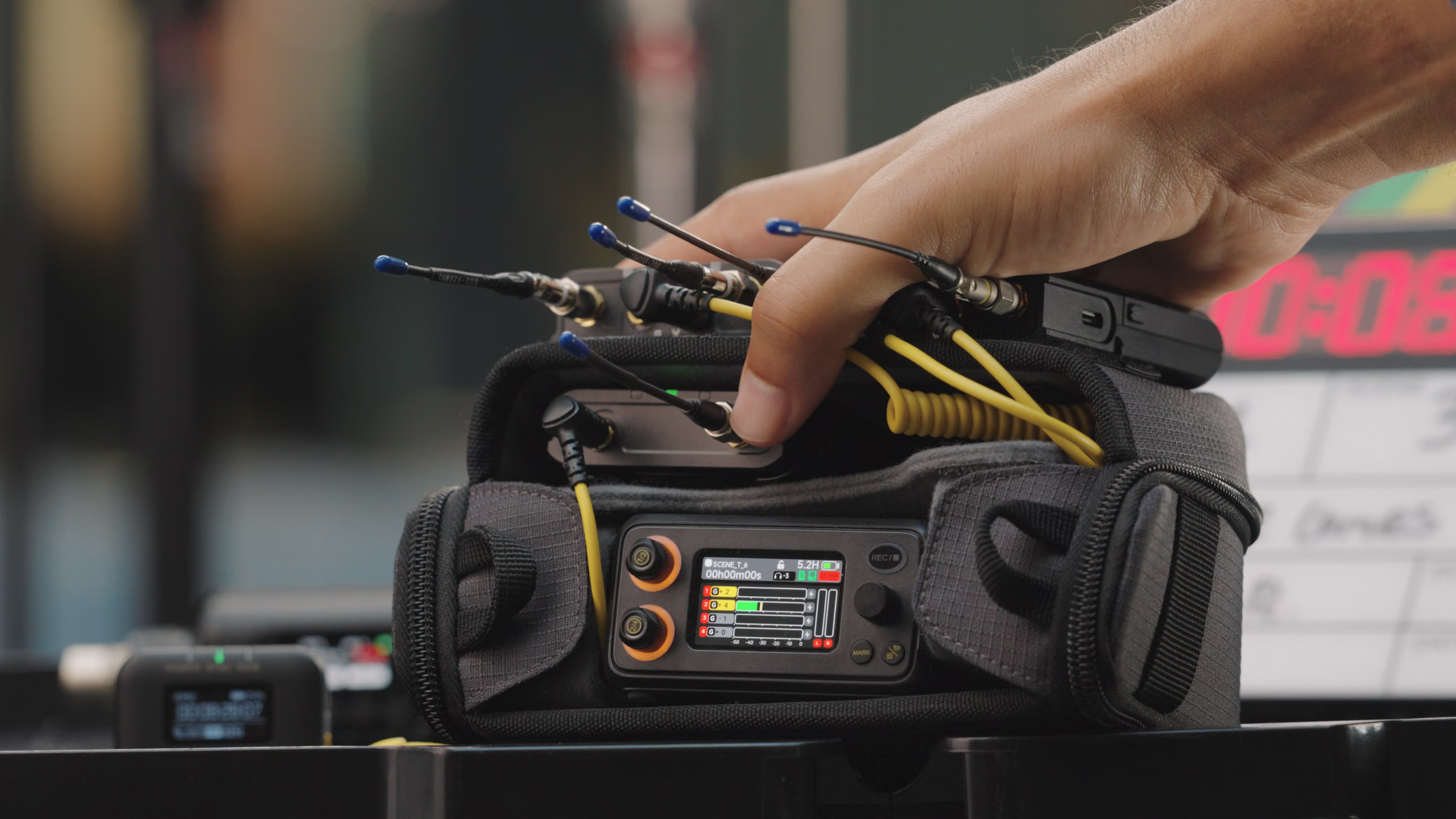
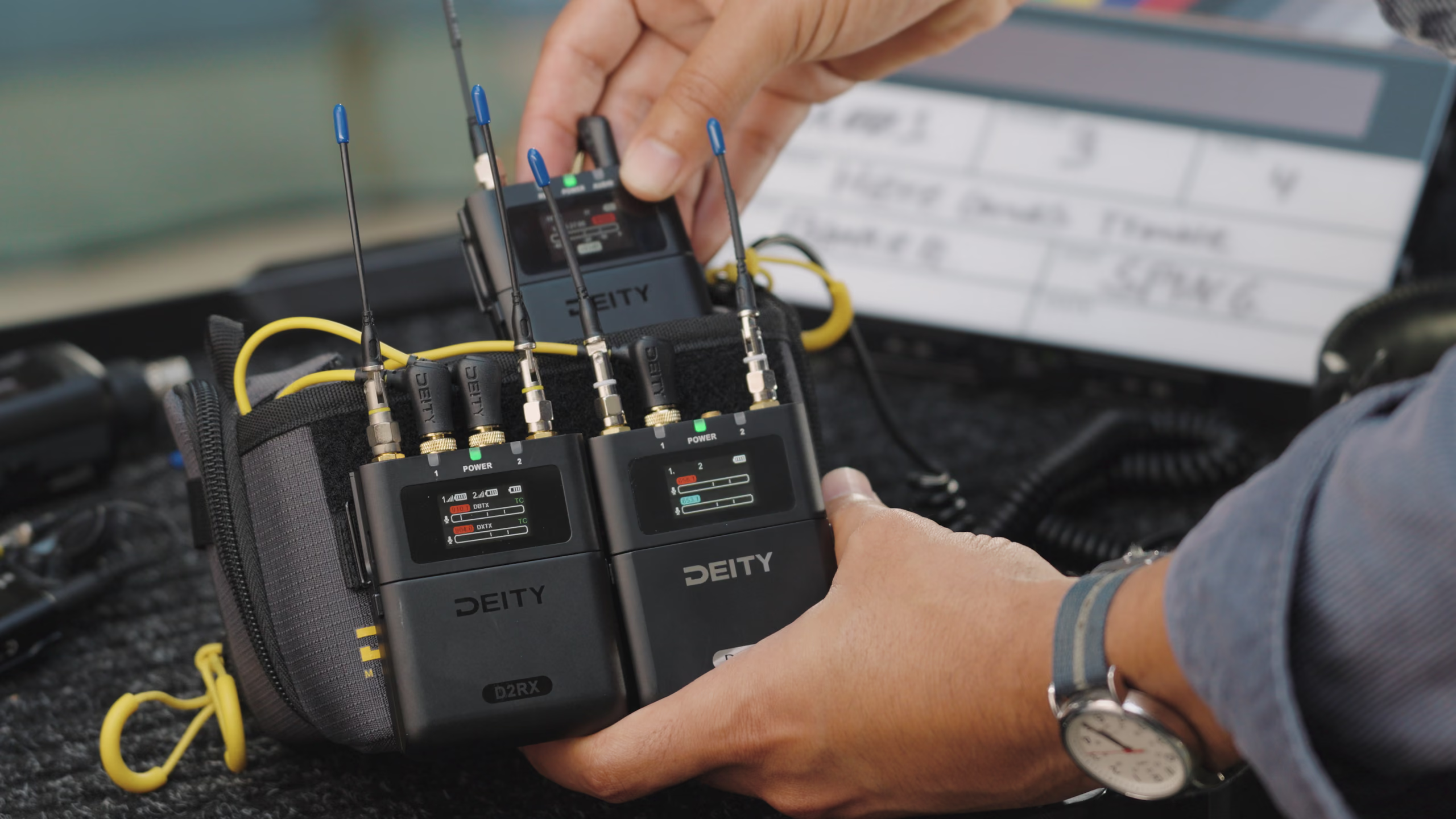
The Deity Field Audio Bag (Mini) is a compact field audio bag designed specifically for the PR-4 recorder, giving sound mixers a lightweight way to build a portable multichannel recording rig. Built from durable rip-stop nylon, the bag provides the strength needed for location work while incorporating comfort and design details for fast-moving productions.
The bag features an all-around zipper design, allowing quick access to the left and right sides of the recorder for cable routing while also opening underneath the bag to access the SD card slot and NP-F battery without removing the recorder. This layout makes it easy to swap media or batteries between shooting days while keeping the recorder fully mounted in the bag.
Inside the bag, a metal support frame and internal sub-chassis give the bag structure and help separate the recorder from the accessory pouch, keeping gear organized while protecting the recorder during transport and use. The entire interior is lined with soft Velcro-compatible felt, allowing users to customize the interior with hook-and-loop mounted accessories.
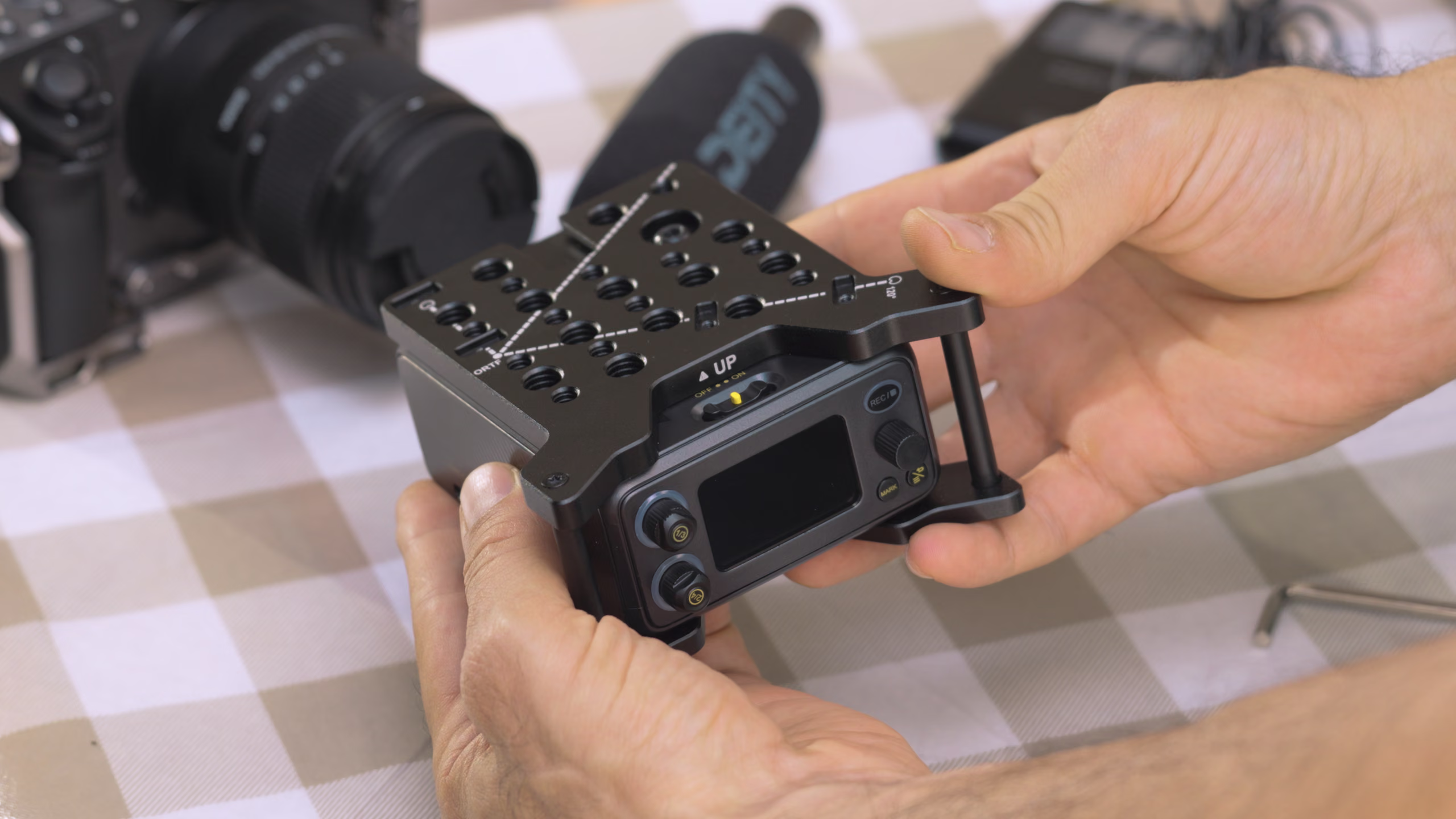
Order nowWhen developing the PR-4 we wanted to improve every aspect of the experience, even how it mounts. After years of having items spin in place when screwed into camera cages or on rigs, we knew basic 1/4″ mounts weren’t going to cut it. Under and on top of the PR-4 are dual Arri-Style 1/4″ 20 mounts with locating-pins.
Now when you mount the PR-4 onto a camera cage, you know it will be truly secured to the cage. And when you go to add accessories on top of it, those accessories aren’t budging either.
The cage also features a built-in ORTF microphone layout, allowing users to quickly mount a matched pair of microphones in the correct stereo configuration without needing separate bars or adapters. By integrating these mounting points directly into the frame, the PR-4 can be transformed into a fast stereo recording solution for ambience, sound effects, and field recording. This design keeps setups compact, repeatable, and easy to deploy in the field.
Order now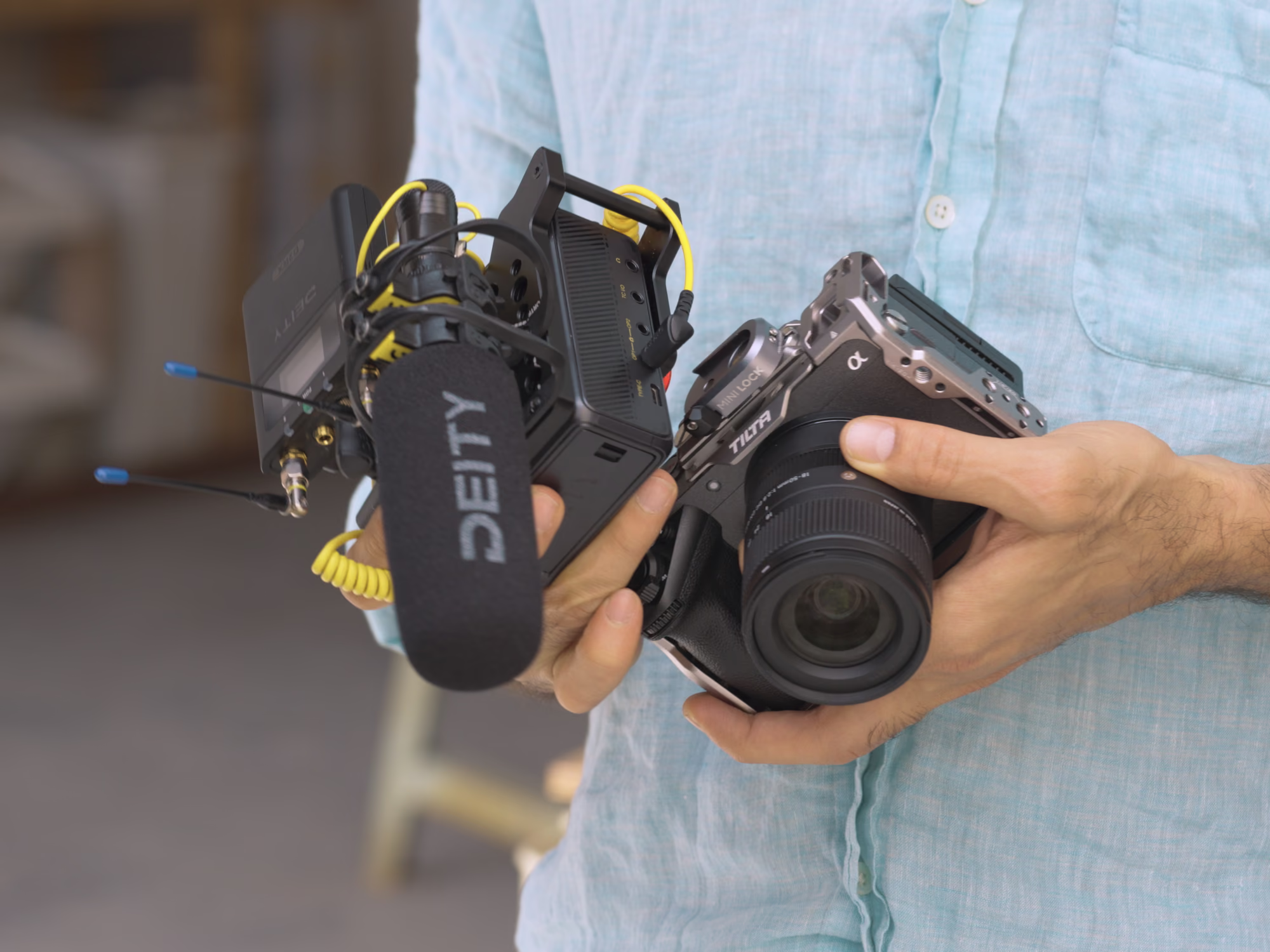
Support
For older firmware versions, check out our downloads page: HERE
Specifications
